
Gain View
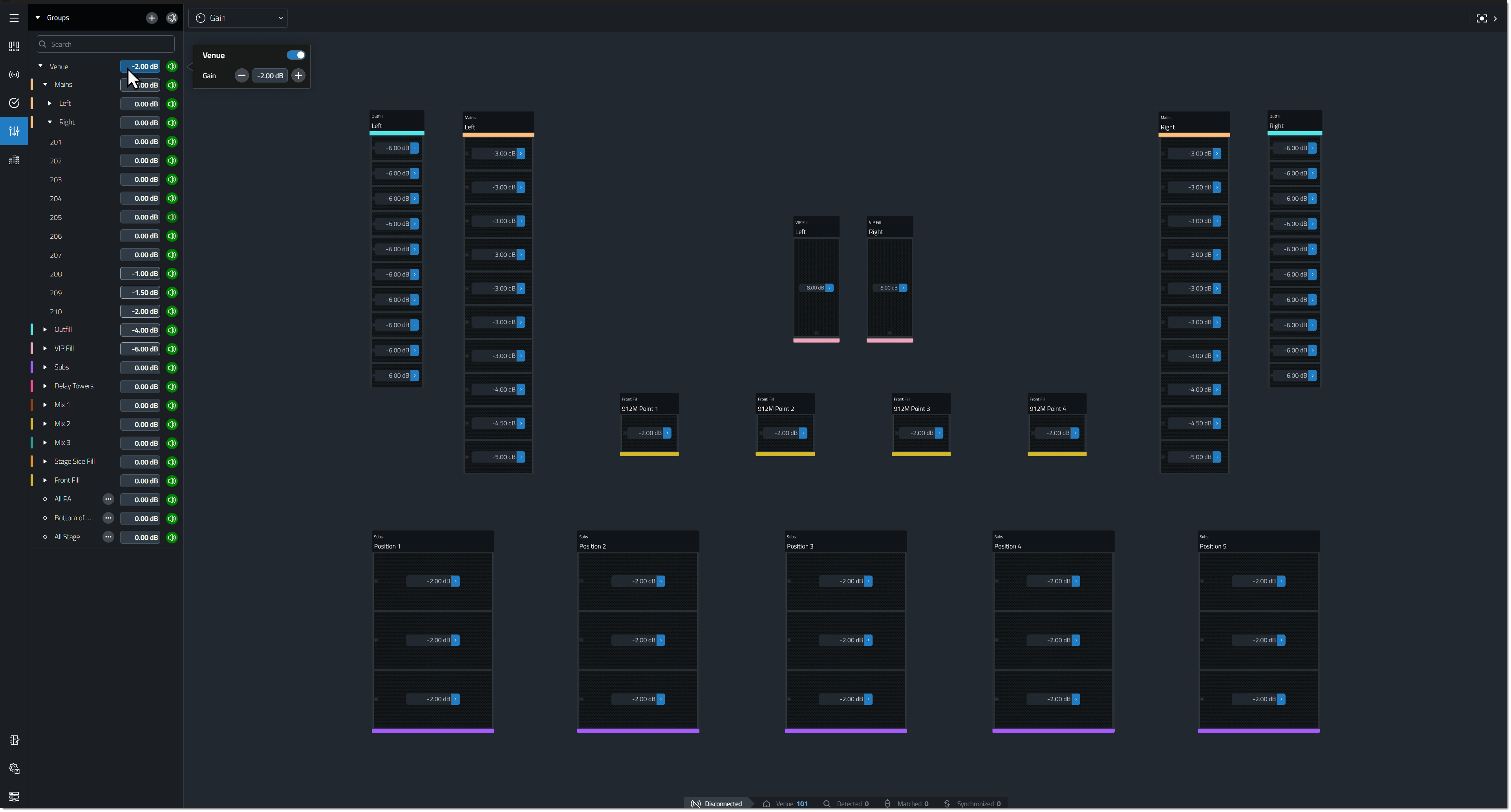
The Gain View allows operators to apply gain to connected devices. Gain can be adjusted for groups in the Groups Panel or for individual devices in the Workspace. Gain values are linked between devices based on speaker type, array type, and symmetry settings. When devices are connected and synchronized, changes are applied in real time. If devices are offline, changes are applied automatically the next time they connect and synchronize.
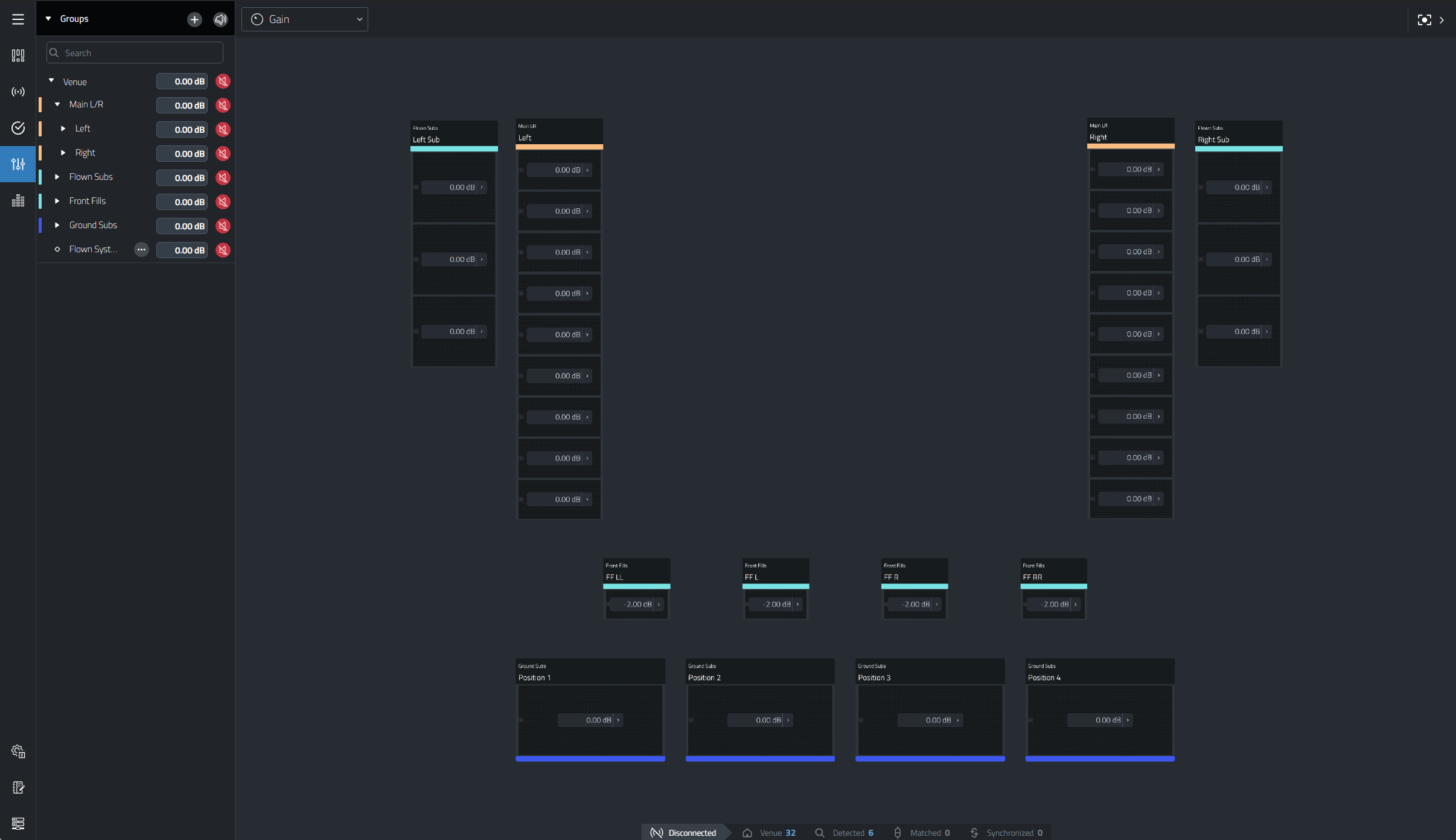
Adjusting a Gain Control
Select the gain value to modify by clicking the value in the Groups Panel or by clicking the corresponding contributor in the device's flyout. A pop-up opens, allowing the value to be entered directly using the keypad or keyboard, depending on user settings. Use the  and
and  buttons to increase or decrease the value incrementally. The Enable control affects only the selected Delay value.
A delay value can also be manually entered by double clicking on the gain value and typing in a new one using the onscreen numeric keypad or a keyboard.
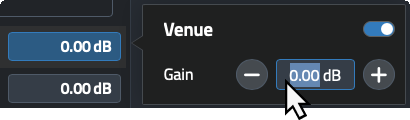
Adjusting Gain from the Groups Panel
The Groups Panel displays a gain value for every group. Adjusting a group's gain value applies that gain to every device that belongs to the group. Because a device can belong to multiple groups, gain can be applied from multiple sources. Each device sums all contributing values and displays the result as a single total gain value. Smart Selection helps visualize which devices will be affected when a group is selected and gain is added.
-
Example 1 – Gain is added to the Venue group. Because every speaker belongs to the Venue group, the ain is applied to every device in the Workspace.
-
Example 2 – Gain is added to a System Group. Every speaker in every array that belongs to the selected System Group receives the gain.
-
Example 3 – Gain is added to an Array. Every speaker in the selected array receives the gain.
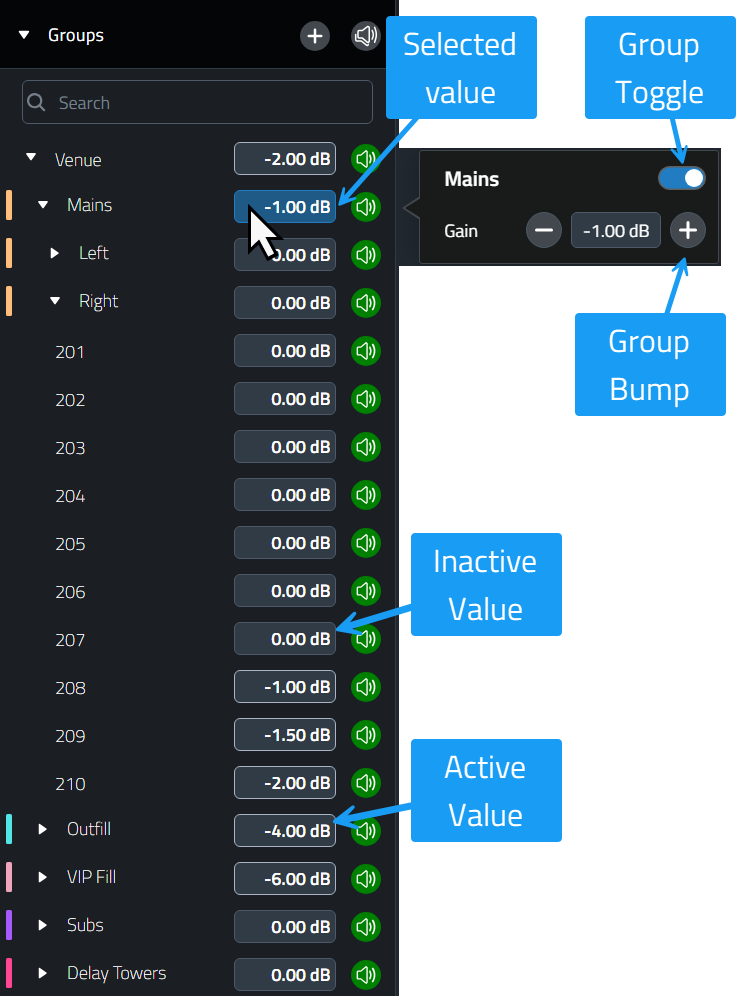
| Name | Description |
|---|---|
| Selected Value | A color change indicates the value currently being modified. Smart Selection highlights other values that will be affected by changes to the selected group. |
| Group Toggle | Indicates whether each contributing group value is enabled. Use this control to enable or disable its contribution. |
| Bump Values | Increases or decreases the value of the selected contributor. |
| Inactive Gain | A gray border indicates that no gain has been set for this value, or that the value is disabled. |
| Active Gain | A white border indicates that gain has been set and is active for this value. |
Device Gain
A single gain value is displayed on each speaker in the Workspace. This value represents the combined gain from all groups to which the speaker belongs. Click the total gainy value to display a table showing each contributing gain value including a value for that device.
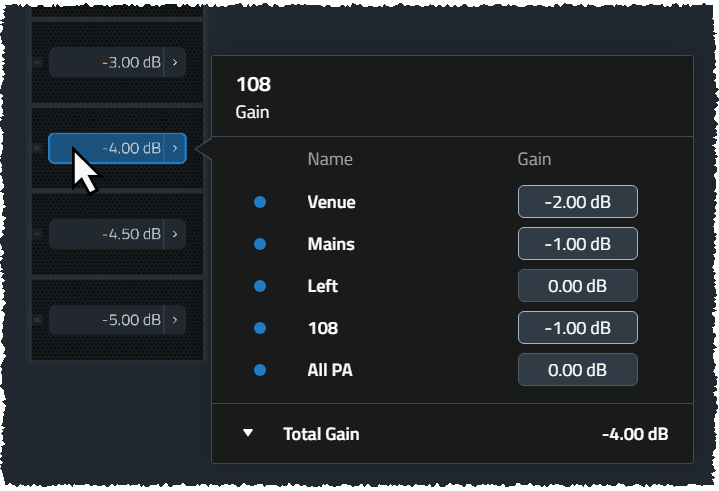
Device Flyout Detail

| Name | Description |
|---|---|
| Row Toggle | Indicates whether each contributing value is enabled. Use this control to enable or disable its contribution to the device's total value. The Toggle will only be shown for a selected contributing value. |
| Contributor Name | Displays the name of the group or the Device ID that contributes the value. |
| Value | Displays the value set for the group. The value can also be modified here by selecting it. |
| Bump Values | Increases or decreases the value of the selected contributor. |
Smart Select
Delay uses Smart Select to highlight selections to make it easier to see what controls are linked through groups, symmetry and linking.
Gain Ranges
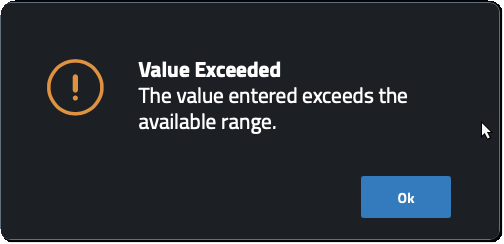
Any given device can only allow up to +20 dB in positive contribution and up to -100 dB in negative contribution. When a group applies a value, it will try to push the entered value into each device. In the event the range exceeds the available range on one of the devices in the group, it will raise a dialog and not apply any changes.
Unequal DSP Indicator 
In the event that one (or multiple) parameters within a grouped control have a value that is not equal to the value of the rest of the values, a small yellow indicator will appear next to that value. This unequal situation can be resolved by re-entering the intended value and hitting enter, the software will resend the correct value to all devices within the array and as a result the devices which previously had differing values will be re-aligned.

