-

HAUT-PARLEURS
DE PLAFOND 

Les haut-parleurs de plafond garantissent des performances supérieures sans compromettre l'esthétique. Conçus pour offrir un son de précision dans les installations commerciales et architecturales, ils sont idéaux pour les concepteurs de systèmes, les intégrateurs et les architectes. Nos haut-parleurs offrent une clarté inégalée pour des applications allant des espaces éducatifs aux environnements d'entreprise.
Faites confiance à JBL Pro pour votre prochaine installation, là où un son exceptionnel rencontre un design sophistiqué.
Enceintes plafonniers Catégories
Les haut-parleurs de plafond de JBL Professional intègrent une technologie acoustique avancée et un design élégant à profil bas. Nos haut-parleurs encastrés au plafond sont proposés dans une gamme de formats.
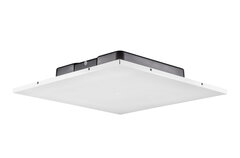
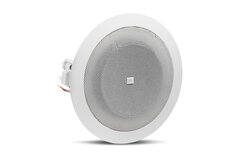
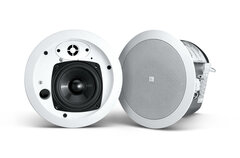
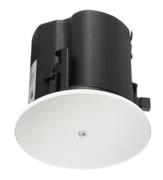
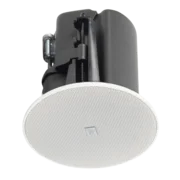
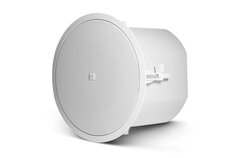
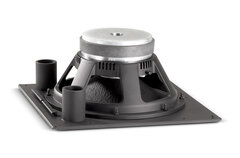
HARMAN Pro Insights : solutions intégrant des enceintes de plafond
Voir tous les articles ↗Les haut-parleurs de plafond JBL Professional peuvent être utilisés dans un large éventail d'applications concrètes afin d'offrir une qualité sonore et des performances optimales.

Commercial Ceiling Speaker Playbook: Top Design Strategies for Enhanced Coverage & Performance
Designing commercial ceiling speaker systems can be challenging. However, ensuring you have the right plan, tools…

Triumph of Illumination: Martin & Celebrity Cruise Line’s Stunning Celebrity Ascent Collaboration
Celebrity Ascent is the fourth and most innovative ship in the highly awarded Celebrity Cruise Line Edge® Series.…

Igniting a Commercial Audio Revolution: Inside JBL Control Contractor Loudspeakers
Founded in 1946 to develop state-of-the-art cinema loudspeakers, JBL realized early on, the growing and diverse…
Si vous recherchez un revendeur ou un distributeur, utilisez notre recherche de partenaires pour découvrir les options adaptées à votre région. Pour optimiser votre installation audio professionnelle, consultez le centre d'assistance afin de bénéficier des solutions proposées par notre équipe dédiée.
Questions fréquentes sur les enceintes de plafond
Comment installer des haut-parleurs de plafond ?
Pour installer des haut-parleurs de plafond, raccordez les câbles de haut-parleur aux bornes appropriées, puis placez délicatement les haut-parleurs dans les ouvertures du plafond. Serrez les clips de fixation afin de maintenir fermement le haut-parleur en position, puis fixez la grille pour terminer l'installation.
Comment installer des haut-parleurs de plafond ?
Pour installer des haut-parleurs de plafond, choisissez d'abord un emplacement approprié entre les solives du plafond et tracez la zone de découpe à l'aide du gabarit fourni. Une fois le trou découpé et le câblage en place, insérez le haut-parleur et fixez-le à l'aide des clips de fixation intégrés.
Quels sont les inconvénients des haut-parleurs de plafond ?
Les haut-parleurs de plafond peuvent être plus difficiles à installer que les haut-parleurs classiques, car ils doivent être encastrés dans le plafond. Ils peuvent également offrir une directivité sonore moins précise, ce qui peut affecter l'expérience d'écoute dans certaines pièces.
Combien coûtent les haut-parleurs de plafond ?
Le coût dépend du nombre de haut-parleurs, de l'amplification et de l'installation. Une seule salle de réunion coûte bien moins cher qu'un système multizone déployé dans des bureaux ou sur un campus. Pour obtenir un devis pour votre projet, contactez un partenaire JBL Professional de votre région.
Quelles sont les différentes tailles d'enceintes de plafond ?
Les haut-parleurs de plafond sont disponibles en plusieurs tailles, les modèles de 5,25 pouces, 6,5 pouces et 8 pouces étant les plus courants. Les haut-parleurs de plus grande taille offrent généralement des basses plus profondes, tandis que les modèles plus compacts conviennent parfaitement aux espaces réduits.
Quels sont les différents types de haut-parleurs de plafond ?
Il existe plusieurs types de haut-parleurs de plafond, notamment des modèles passifs, actifs, Bluetooth et résistants à l'humidité. Certains sont conçus pour la lecture musicale, tandis que d'autres sont optimisés pour le home cinéma ou les installations audio commerciales.
Comment choisir des haut-parleurs de plafond ?
Lors du choix des haut-parleurs de plafond, tenez compte de la taille de la pièce, de l'usage prévu et des exigences en matière de qualité sonore. Il est également important de vérifier la compatibilité avec votre amplificateur ou votre système audio avant l'achat.
Les haut-parleurs de plafond sont-ils une bonne idée ?
Les enceintes de plafond constituent une excellente option pour créer un rendu épuré et sans encombrement tout en diffusant un son de haute qualité dans l'ensemble d'une pièce. Elles conviennent particulièrement bien à la musique d'ambiance, à la diffusion audio multizone et aux systèmes de divertissement domestique.
Les haut-parleurs de plafond nécessitent-ils une alimentation ?
Les haut-parleurs de plafond passifs tirent leur alimentation directement d'un amplificateur, tandis que les haut-parleurs de plafond actifs intègrent un amplificateur et nécessitent leur propre connexion à l'alimentation secteur.
Quelle est la fonction des enceintes de plafond ?
Les haut-parleurs de plafond sont conçus pour offrir une diffusion sonore discrète sans occuper d'espace mural ou au sol. Ils sont couramment utilisés pour la musique, les systèmes de home cinéma et les applications de sonorisation.
À quoi dois-je raccorder mes haut-parleurs de plafond ?
La plupart des enceintes de plafond se raccordent à un amplificateur, à un récepteur AV ou à un système audio multipièce à l'aide d'un câble d'enceinte. Le raccordement exact dépendra du type de modèle, passif ou actif.